Assistive Technology (AT) & Independence
When you hear "assistive technology," does your mind picture complex gadgets or high-end robotics? What if the simplest, most effective form of AT is often the one that disappears into your daily routine, promoting environmental modification and true independence?
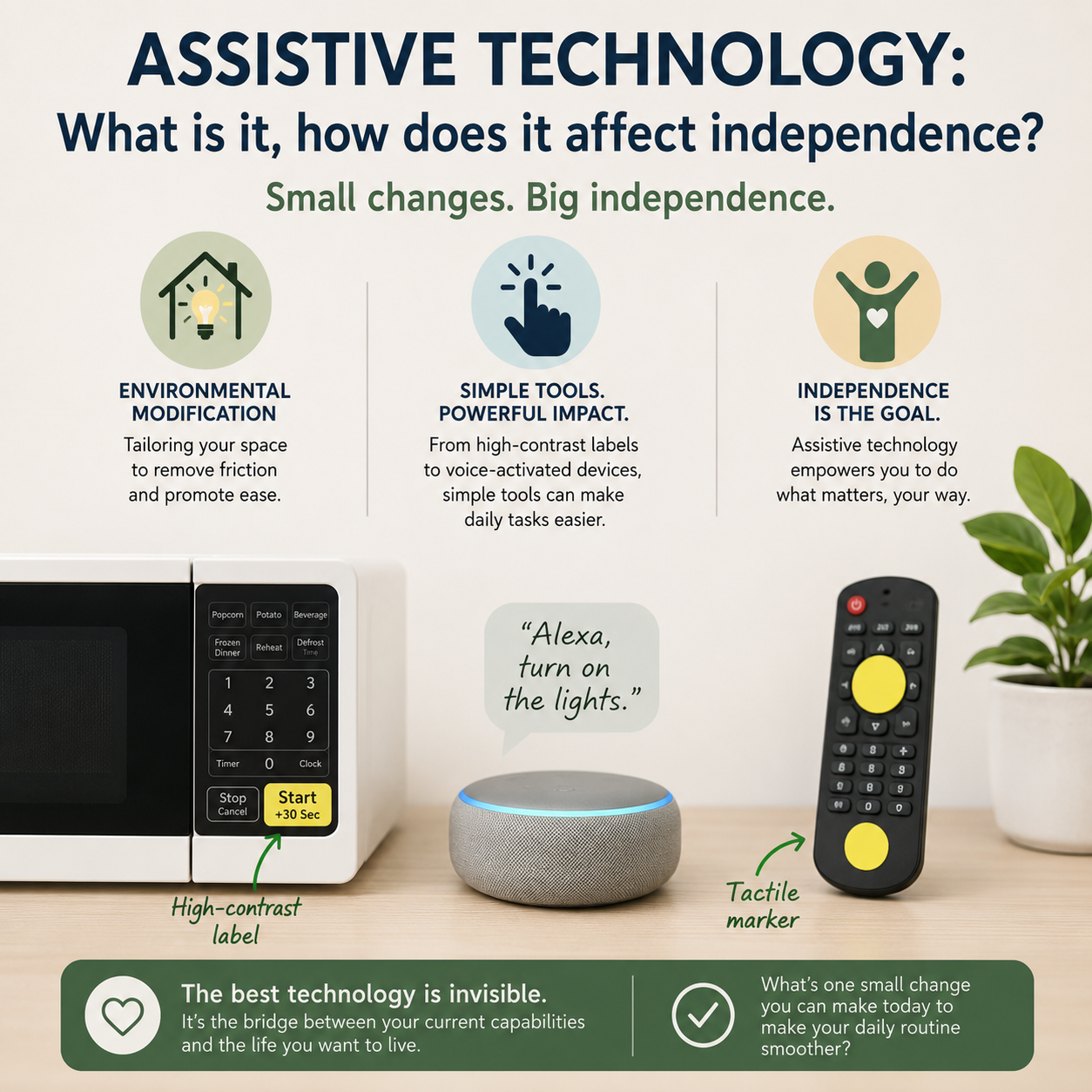
Assistive Technology: What is it, how does it affect independence?
The core goal of any assistive tool is not to make us "tech experts" but to help maintain autonomy. Sometimes, the most powerful tech isn't software. It’s a simple, high-contrast sticker on a microwave’s start button or a voice-activated smart home device that lets one turn on the lights without fumbling for a switch.
Real accessibility is about removing friction. It’s about tailoring the environment so that tools work seamlessly, rather than users having to wrestle with them.
Working with clients and people in need, I have learned whether I am using built-in smartphone features like magnification or voice commands, or simply placing tactile markers on someone's remote, the best solutions are the ones that require the least amount of "re-learning" for them!
Using Street Smart Tech, I believe the best technology is invisible. It’s the bridge between one's current capabilities and the tasks they want to accomplish daily. By choosing & streamlining tools that prioritize ease of use, we aren't just adopting technology, we are reclaiming our joy, hope, space, confidence, and being while architecting our own independence.
Want to practice easily? What is the one small change in your home that could make your daily routine smoother? Let’s start there.